Showing posts with label july. Show all posts

7.14.2016

Wednesday, July 13 - Thursday, July 14: Murders in Chicago


A young killer forced his way into a quiet residential dormitory early Thursday, bound nine student nurses, then dragged them one by one into other rooms and methodically strangled or stabbed eith of them to death. The ninth escaped the killer's insatiable lust for blood by crouching in frozen terror under a bed.
     -- Associated Press: @

* Summary (Chicago Tribune): @
* Summary (www.history.com): @
* Summary (www.biography.com): @
* Chicago Tribune, July 14, 1966: @
* "Detailed Account of a Terrible Crime" (Chicago Tribune, July 23, 1966): @
* Life magazine (July 29, 1966): @
* Richard Speck obituary (New York Times, December 5, 1991): @
* "The Crime of the Century: Richard Speck and the Murders That Shocked the Nation" (Dennis L. Breo and William J. Martin, 2016): @
* Photos (murderpedia.org): @ 

7.01.2016

Friday, July 1, 1966: The end of Prohibition

Mississippi, the first state to ratify national prohibition in 1918, today ended the last statewide ban on liquor. Although liquor became legal at 12:01 a.m., it won't really be legal until a county votes itself wet -- which will take at least 16 days. Gov. Paul B. Johnson has vowed strict compliance with statewide enforcement of prohibition until such referendums are held. It was Johnson who called for legalization earlier this year, terming prohibition a farce.
     -- Associated Press: @

* 1962: "A tax on lawbreakers only" (Life magazine, May 11): @
* 1965: "Mississippi's dry -- in a wet sort of way" (Associated Press, January 21): @
* July 27, 1966: "Legal Booze Brings Joy to Thirsty Biloxi Tipplers" (AP): @
* August 6, 1966: First legal liquor store: @
* Wet/dry map (Alcoholic Beverage Control, Mississippi Department of Revenue): @
* Wet/dry map for beer and light wine (Alcoholic Beverage Control, Mississippi Department of Revenue): @
* "Forty Years of Legal Liquor: It's Mostly Ho-Hum" (Bill Minor, 2006): @
* "Mississippi Moonshine Politics" (Janice Branch Tracy, 2015): @ 

6.30.2016

July 1966: Black Panther


The Black Panther, the first African American superhero*, appeared in Marvel Comics' "Fanastic Four" #52 in 1966. Born as T'Challa in the fictional African land of Wakanda, his father, a tribal chief, was killed by a white Dutchman intent on stealing Wakanda's natural resources. T'Challa swore to avenge his father's death and traveled to the West to study science. He returned to Wakanda to rule as the Black Panther and transformed his homeland into a prosperous nation.
     -- From "Africana: the Encyclopedia of the African and African American Experience" (edited by Kwame Anthony Appiah and Henry Louis Gates Jr., 2005): @
     * Note: The Black Panther is often referred to as the first black superhero, as his origins are African rather than African-American.

* Summaries of Fantastic Four #52 and #53 (Marvel Masterworks): @ and @
* Summaries of Fantastic Four #52 and #53 (Marvel Database): @ and @
* Black Panther profile (Marvel.com): @
* Profile (Marvel Directory): @
* Profile (ComicBookDB.com): @
* Profile (Comic Vine): @
* "Everything You Need To Know About Black Panther Before Marvel's 'Civil War' " (io9.gizmodo.com, 2016): @
* Summary from "Icons of the American Comic Book: From Captain America to Wonder Woman" (2013): @
* "Marvel in the Civil Rights Era: A noble Panther, a gritty Cage" (Gary Phillips, 2012): @
* "Super Black: American Pop Culture and Black Superheroes" (Adilifu Nama, 2011): @ 
* Stan Lee website: @
* Jack Kirby Museum: @

7.30.2015

Friday, July 30, 1965: Medicare and Medicaid


INDEPENDENCE, Mo., July 31 -- President Johnson signed his $6.5 billion medicare bill yesterday after journeying more than 1,000 miles to share "this time of triumph" with former President Truman. The new law, said the 81-year-old former president, will mean dignity, not charity "for those of us who have moved to the sidelines." Then, one hand on his cane, Mr. Truman stepped aside as Mr. Johnson told how the vast program of medical insurance for the elderly would help millions of Americans. ... 
     This document was a 133-page bill which soared past its final congressional test Wednesday. At a $6.5 billion price tag, it will provide hospital insurance for Americans over 65, set up a voluntary program to cover the doctors' bills of elderly Americans and boost Social Security benefits. Mr. Johnson's signature set in motion machinery that will reach Social Security pensioners in September -- in the form of retroactive increases in their government checks. The health insurance programs go into operation next July 1.
     -- From The Associated Press (full story: @)

* "Medicare and Social Security: Here're Your Rights and Benefits" (Newspaper Enterprise Association, July 1965): @
* "Who's Eligible for Medicare?" (NEA, July 1965): @
* "Medicaid Cost May Be Gigantic" (NEA, July 1966): @
* "Program of Medicare Goes In Effect Today" (United Press International, July 1, 1966): @
* "Happy Birthday, Medicare!" (Government Printing Office, 2014; includes link to full text of law): @
* President Johnson's remarks (LBJ Library): @
* "50th Anniversary of Medicare and Medicaid" (LBJ Library): @
* Summary (U.S. Senate): @
* Summary (Harry S. Truman Library and Museum): @
* Summary and links (www.policyalmanac.org): @
* National Bipartisan Commission on the Future of Medicare (1999): @
* Medicare Timeline (Kaiser Family Foundation): @
* "Generations: Medicare at 50 Years" (Kaiser Family Foundation): @
* "When Medicare launched, nobody had any clue whether it would work" (The Washington Post, 2013): @ 

7.28.2015

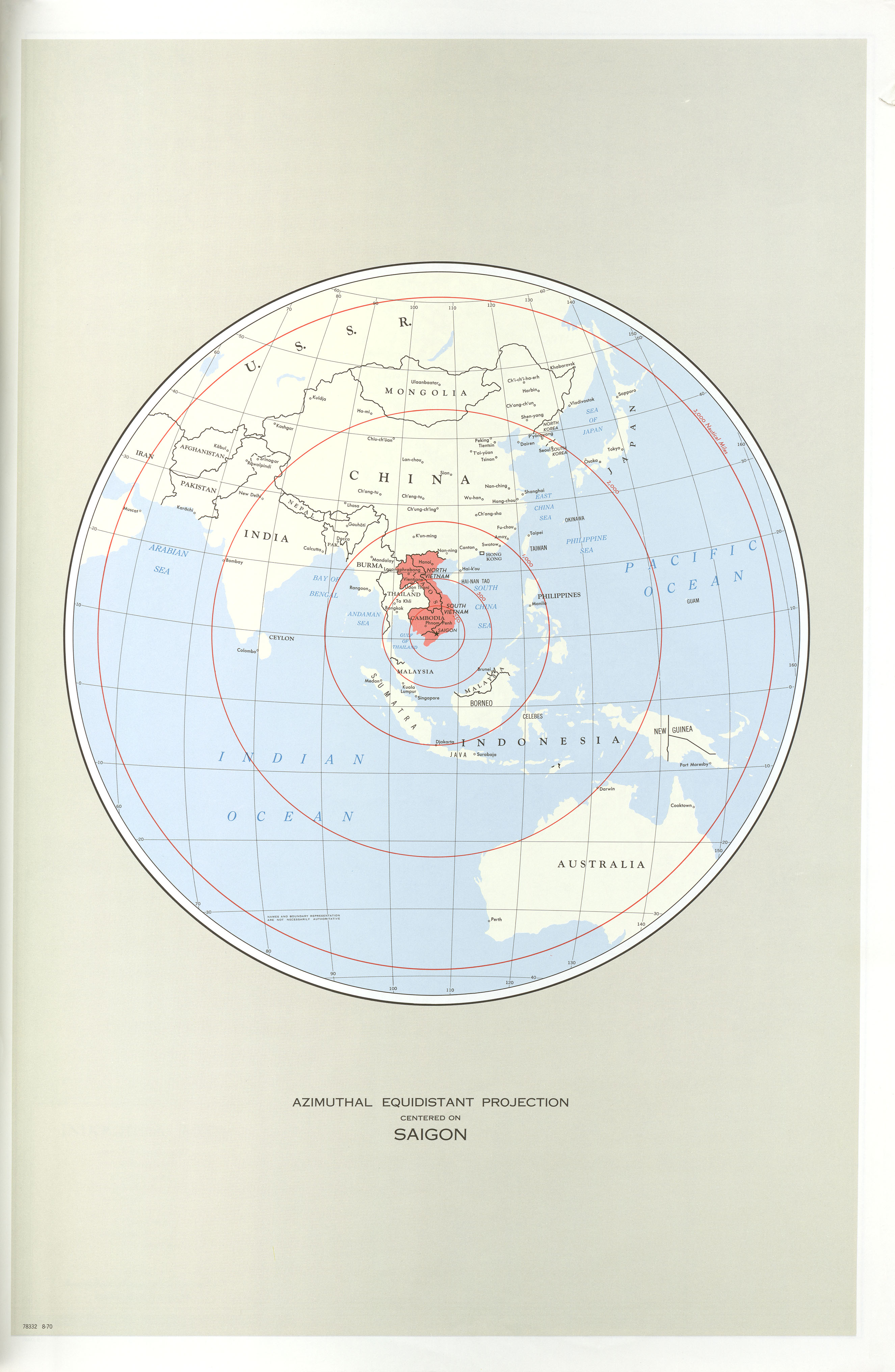
Wednesday, July 28, 1965: 'This ... is why we are in Vietnam'


President Johnson begins his news conference by announcing plans to increase U.S. troops in the Vietnam War from 75,000 to 125,000, along with doubling the monthly military draft quota from 17,000 to 35,000. He also lays out the reasons for America's increasing involvement, including this passage:

"We did not choose to be the guardians at the gate, but there is no one else. ... Three presidents -- President Eisenhower, President Kennedy, and your present president -- over 11 years have committed themselves and have promised to help defend this small and valiant nation. Strengthened by that promise,  the people of South Vietnam have fought for many long years. Thousands of them have died. Thousands more have been crippled and scarred by war. We just cannot now dishonor our word, or abandon our commitment, or leave those who believed us and who trusted us to the terror and repression and murder that would follow. This, then, my fellow Americans, is why we are in Vietnam." 

Johnson concludes with these words: "... as long as there are men who hate and destroy, we must have the courage to resist, or we will see it all, all that we have built, all that we hope to build, all of our dreams for freedom -- all, all will be swept away on the flood of conquest. So, too, this shall not happen. We will stand in Vietnam."

-- Map detail from "Azimuthal Equidistant Projection Centered on Saigon" (CIA, 1965): @

Resources
* Transcript (from "Public Papers of the Presidents of the United States"): @
* Video & audio (Miller Center, University of Virginia): @
* "Build-Up in Viet Nam" (Toledo Blade, July 25, 1965): @
* "President Doubles Draft Call" (United Press International, July 28, 1965): @
* "LBJ Hikes Draft for Viet Nam War" (Associated Press, July 29): @
* "Johnson Tells Why Vietnam in Pamphlet" (Associated Press, August 24): @
* "Why Viet-Nam" (Department of Defense, 1965; includes remarks from Johnson's news conference; from Internet Archive): @
* "Johnson's Escalation of Vietnam: A Timeline" (Bill Moyers Journal, 2009): @ 
* Excerpt from "Presidents and Protestors: Political Rhetoric in the 1960s" (Theodore Windt, 1990): @
* "McNamara, Clifford, and the Burdens of Vietnam" (Secretaries of Defense Historical Series, 2011): @
* Pentagon Papers (National Archives, 1969): @ 

7.25.2015

Sunday, July 25, 1965: Dylan goes electric


At the Newport Folk Festival, Bob Dylan surprises the audience with his hard-rocking set. Accounts vary as to whether the crowd was unhappy over his new style of music or over the  quality of the sound system.
     -- Photo from Michael Ochs Archives

* Summary (www.history.com): @
* Summary (www.smithsonianmag.com): @
* Video of "Maggie's Farm" performance: @
* Video of Pete Seeger's account: @
* Set list (www.bobdylan.com): @
* Excerpt from "No Direction Home: The Life and Music of Bob Dylan" (Robert Shelton, 1986): @
* "No Direction Home": @ 
* "Newport: It's All Right, Ma, I'm Only Playing R & R" (The Village Voice, August 5, 1965): @
* "The Legend of Dylan at Newport" (Sam Allis, The Boston Globe, 2002): @
* "Dylan Goes Electric! Newport, Seeger, Dylan, and the Night That Split the Sixties" (Elijah Wald, 2015): @
* "Dylan at Newport, 1965: Music, Myth and Un-Meaning" (Edward Renehan, 2015): @ 

7.16.2015

Friday, July 16, 1965: The Southern Courier


The Southern Courier was established in 1965 by college students and recent graduates to cover the civil rights movement and President Lyndon Johnson's War on Poverty in the American South. Despite the paper's small size and relatively short publication life, The Southern Courier fulfilled an important and sorely needed role in the post-1965 South by providing African Americans and sympathetic whites with a broader sense of community in the fight for equality. The Southern Courier offered a more complex view of race relations to the general public.
     -- From Encyclopedia of Alabama (full summary: @)

* Southern Courier site (includes links to PDFs of every issue): @
* Jim Peppler Southern Courier Photograph Collection (Alabama Department of Archives and History): @
* Summary from Veterans of the Civil Rights Movement: @
* "A Personal Historian's Memories of the American Civil Rights Era: Birmingham Alabama 1967" (Joan Tornow, 2015): @
* "Civil Rights: Student Editors from Harvard Plan an Independent Newspaper" (Nashua Telegraph, May 5, 1965): @
* "New Civil Rights Paper Covers Southern Issues" (The Michigan Daily, July 1, 1965): @
* "The Southern Courier: A Study of Civil Rights Journalism in Alabama" (Nieman Reports, December 1966, page 15): @
* Excerpt from "Fighting the Devil in Dixie: How Civil Rights Activists Took On the Ku Klux Klan" (Wayne Greenhaw, 2011): @ 

7.14.2015

Wednesday, July 14, 1965: Mariner 4's photos of Mars


Man's first closeup picture of Mars shows a remarkably earth-like desert area -- but gives no hint of an answer to whether they mysterious planet could harbor life. The poorly defined picture snapped as Mariner 4 flew within 10,500 miles of Mars Wednesday was released Thursday night while the U.S. spacecraft was relaying its second picture across 134 million miles of space. Almost half the picture showed only the dark void of space, with but a small portion of the edge of Mars visible in the streaked and smudged frame. (From The Associated Press; full story: @)
     -- Image from NASA; all Mariner 4 photos: @

* "Mariner 4 Makes Flight Past Mars" (The New York Times): @
* Flight details (NASA): @
* "Mariner to Mercury, Venus and Mars" (Jet Propulsion Laboratory): @
* "Mariner 4: First Spacecraft to Mars" (Space.com): @
* "Blast from the past: Mariner 4's images of Mars" (The Planetary Society, 2012): @
* "Looking back at Mariner images of Mars" (The Planetary Society, 2013): @
* Hand-colored image: @ (Jet Propulsion Laboratory) and @ (Dan Goods)

7.01.2015

July 1965: Polaroid Swinger


     For only a double sawbuck now, you get not only a Polaroid camera but also a chance to admire one of the simplest and smartest exposure systems since the day, a century and a quarter ago, when Daguerre first squinted into the sun and shot a picture of a man getting his shoes shined.
     The camera is the brand-new Swinger, just announced by Polaroid. Its gets its name from the way you carry it -- on a wrist strap. It shoots only black-and-white, 2 1/2 by 3 1/2 inches.
     -- "The Swinger: New $20 Polaroid" (Popular Science, August 1965): @

* "50 Years Ago, the Polaroid Swinger Found Instant Fame" (Christopher Bonanos, 2015): @
* "Instant: The Story of Polaroid" (Bonanos, 2012): @
* "The Polaroid Swinger: Changing the Market in an Instant" (Michael Beschloss, New York Times, 2015): @
* Instruction booklet (from www.cameramanuals.org): @
* TV ad (from archive.org): @
* "New for Camera Buffs" (Popular Mechanics, August 1965): @ 
* "Polaroid Produces Under-$20 Camera" (Associated Press, July 1965): @

4.23.2015

April-July 1965: 'Satisfaction'


April 1965 *
     I was between girlfriends at the time, in my flat in Carlton Hill, St. John's Wood. Hence maybe the mood of the song. I wrote "Satisfaction" in my sleep. I had no idea I'd written it, it's only thank God for the little Philips cassette player. The miracle being that I looked at the cassette player that morning and I knew I'd put a brand-new tape in the previous night, and I saw it was at the end. Then I pushed rewind and there was "Satisfaction." It was just a rough idea. There was just the bare bones of the song, and it didn't have all that noise, of course, because I was on acoustic. And forty minutes of me snoring. -- From "Life," by Keith Richards, 2010: @
     * According to other accounts, this occurred the night of May 6 in Clearwater, Florida, during the Rolling Stones' tour of North America. However, since Richards places it in London, this would have been before the tour, which began April 23 in Montreal, Canada. 
     Mick Jagger was also later quoted as saying that he and Richards worked on the song "half in Canada, half in Florida" (Melody Maker, June 26, 1965). Regardless, the opening riff and the phrase "I Can't Get No Satisfaction" are credited to Richards, while Jagger wrote most of the rest of the lyrics.

May 10-12
     The band records the song, first in Chicago (May 10) and then in Los Angeles (May 11-12).

May 20, May 26

     The band premieres the song on the television show "Shindig!" (The show was taped on May 20 and aired on ABC on May 26.)


Late May *
     The song is released in the United States.
     * Many accounts say the song was released June 5 or June 6, but the single was already on sale by then. The image above is from The Portsmouth (New Hampshire) Herald, June 3, 1965. Also, a music survey from KMEN in San Bernadino, California, indicates that the song was released on May 25; link: @.


June 5
     "Satisfaction" is first mentioned in Billboard magazine's "Singles Reviews," above.
     * June 5 issue: @

June 12
     The song debuts on Billboard's Hot 100 at No. 67.
     * June 12 issue: @

July 10
     "Satisfaction" reaches No. 1 on the Billboard charts; it stays at the top for four weeks, displaced on August 7 by "I'm Henry VIII, I Am" by Herman's Hermits.
     * Billboard chart for July 10 (from billboard.com): @
     * July 17 issue: @
     * July 24 issue: @
     * July 31 issue: @
     * August 7 issue: @

August 20 *
     "Satisfaction" is released in Britain. The B-side was "The Spider and The Fly," unlike the American release, whose B-side was "The Under Assistant West Coast Promotion Man."
     * Date approximate; from Billboard, August 21: "This week Decca rushes out in Britain the Stones' recent big American hit '(I Can't Get No) Satisfaction' ..."

Resources
* Entry from "Rocks Off: 50 Tracks That Tell the Story of the Rolling Stones" (Bill Janovitz, 2013): @
* Entry from "The Billboard Book of Number One Hits" (2003): @
* Entry from www.allmusic.com: @
* "The Rolling Stones' ('I Can't Get No) Satisfaction' " (Performing Songwriter, 2013): @
* "Behind the Song: 'Satisfaction' " (American Songwriter, 2012): @
* "Let It Read! The Ultimate Literary Guide to the Rolling Stones" (The Daily Beast, 2012): @
* "Rolling Stoned" (Andrew Loog Oldham, 2011): @
* "Stone Alone: The Story of a Rock 'n' Roll Band" (Bill Wyman, 1990): @
* "The Complete Works of the Rolling Stones" (database): @
* "The Rolling Stones: Off the Record" (Mark Paytress, 2003): @
* "The Rolling Stones: Fifty Years" (Christopher Sandford, 2012): @
* "1965: The Most Revolutionary Year in Music" (Andrew Grant Jackson, 2015): @
* Please Please Me: Sixties British Pop, Inside Out" (Gordon Thompson, 2008): @

7.23.2014

Thursday, July 23, 1964: Civil Rights Act arrests


GREENWOOD, Miss., July 24 -- The FBI has made its first arrests under the public accommodations sections of the new Civil Rights Act yesterday.
     Agents of the bureau charged three Greenwood white men with a conspiracy designed to keep a Negro from going to a movie theater. ...
     The FBI charged the three with "unlawfully conspiring to injure, oppress, threaten, and intimidate" Silas McGhee, 21, of Greenwood, "in the free exercise of his right to full and equal enjoyment of a motion picture picture house, the Leflore Theatre."
     On July 16, Mr. McGhee staggered into the Greenwood FBI office, bleeding from head wounds and suffering from shock.
     Mr. McGhee, a staff worker with the Student Nonviolent Coordinating Committe, said the three, in a pickup truck, forced him at the point of a gun to accompany them.
     He said they asked him if he had been to the movie the previous night, When he replied yes, he said, he was beaten with a pipe and a board.
     -- Associated Press (full story: @)
     -- Photo of Leflore Theatre in the 1940s; from www.aboutgreenwood.ms.com (link: @)

Note: The men were indicted, tried and found innocent.
     * "Federal Jury Indicts Three" (United Press International, January 1965): @
     * "Find Mississippians Innocent in Beating" (UPI, October 1966): @

More about the incident and the McGhee family
* "Freedom Summer Incident Summary by City or County" (Civil Rights in Mississippi Digital Archive; scroll down to Greenwood): @
* "Miss. Woman Arrested After Punching Cop In Nose" (Jet magazine, September 1964): @
* "The McGhees: If You Don't Fight For It, You Don't Need It" (from "I've Got the Light of Freedom: The Organizing Tradition and the Mississippi Freedom Struggle," Charles M. Payne, 1995): @
* McGhee and his family are mentioned in several passages in "Pillar of Fire: America in the King Years" (Taylor Branch, 1997; search for "McGhee"): @
* Passage from "The Wrong Side of Murder Creek: A White Southerner in the Freedom Movement," Bob Zellner, 2008): @
* "The Shooting of Silas McGhee" (Linda Wetmore Halpern, 2010): @
* Passage from "Student Activism and Civil Rights in Mississippi: Protest Politics and the Struggle for Racial Justice, 1960-1965," James P. Marshall, 2013): @
* "Freedom Summer, 1964: Did It Really Change Mississippi?" (Nikole Hannah-Jones, The Atlantic magazine, July 2014): @

Other resources
* "Saturday, July 6, 1963: Greenwood, Mississippi" (earlier blog post; I'm fairly sure, though not absolutely certain, that the event featuring Pete Seeger and Bob Dylan took place on the McGhee family farm): @
* "Greenwood Theatre Torn Down By City" (Jackson Daily News, January 1969): @ 

7.16.2014

Thursday, July 16, 1964: 'Extremism in the defense of liberty is no vice'


Accepting the Republican nomination for president, Arizona Sen. Barry Goldwater tells delegates at the GOP national convention in San Francisco:

I would remind you that extremism in the defense of liberty is no vice. And let me remind you also that moderation in the pursuit of justice is no virtue.

The "extremism" issue had come largely from New York Gov. Nelson Rockefeller, whose pursuit of the GOP nomination failed as his party embraced more conservative views. Rockefeller (and in turn, the Democrats) warned that the Goldwater forces were a threat to peace and progress.

Resources
* Video of speech (C-SPAN via NBC): @ and @
* Transcript of speech (Washington Post via Arizona Historical Foundation): @
* New York Times story, July 15: @
* Associated Press story, July 17 (note error in headline, which says "pursuit of happiness" instead of "pursuit of justice"): @
* United Press International story, July 17: @
* Life magazine, July 24: @
* "Goldwater Clarifies 'Extremism' " (Associated Press, August 10): @
* Party platform (American Presidency Project): @
* Video of first part of Rockefeller speech to the convention (C-SPAN): @
* Audio of entire speech (pastdaily.com): @
* "Remarks on extremism at the 1964 Republican National Convention" (July 14; Rockefeller Archive Center; note: prepared remarks differ from speech): @ and @
* "The 1964 Republican Campaign" ("The Rockefellers," PBS): @
* "Margaret Chase Smith for President" (Maine History Online): @
* "1964: The Conventions" (U.S. Information Agency): @
* "The Delegate" (documentary, National Educational Television): @
* 1964 campaign commercials (The Living Room Candidate, Museum of the Modern Image): @
* "Election of 1964" (from "Presidential Campaigns: Documents Decoded," Daniel M. Shea and Brian M. Harward, 2013): @
* "Overviews & Chronologies: 1964" (Presidential Campaigns & Elections Reference): @
* "LBJ Fights the White Backlash: The Racial Politics of the 1964 Presidential Campaign" (Jeremy D. Mayer, Prologue magazine, National Archives): @
* "1964 Republican Convention: Revolution From The Right" (Rick Perlstein, Smithsonian magazine, August 2008): @
* "Before the Storm: Barry Goldwater and the Unmaking of the American Consensus" (Perlstein, 2001): @
* "Turning Right in the Sixties: The Conservative Capture of the GOP" (Mary C. Brennan, 1995): @
* Review of "Turning Right" (Matthew Dallek, The Atlantic, 1995): @
* "The Rise of the Counter-Establishment: The Conservative Ascent to Political Power" (Sidney Blumenthal, 2008): @
* "Barry Goldwater and the Remaking of the American Political Landscape" (edited by Elizabeth Tandy Shermer, 2013): @ 

Blog archive

Twitter

Follow: @